
Link to the paper here
We are pleased to share that the research behind MARPaHealth was presented at the Doctoral Symposium of PoEM 2025.
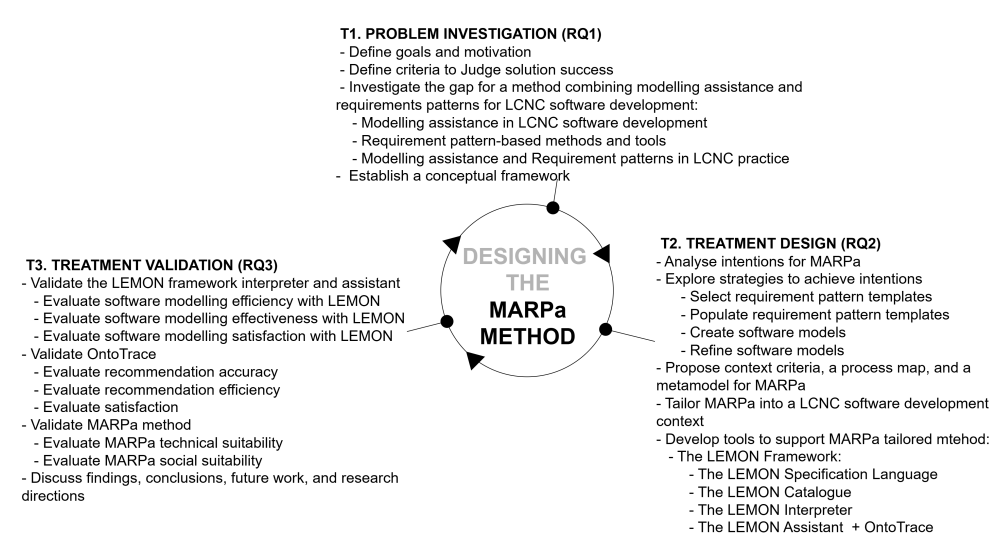
The presentation focused on MARPa, the research foundation that supports our vision for improving Low-Code/No-Code (LCNC) software development through requirement patterns and modelling assistance.
Low-Code/No-Code platforms are making software development more accessible by enabling users to create applications through visual models and configuration interfaces. However, an important challenge remains: moving from requirements to software models in a systematic, reusable, and collaborative way.
In requirements engineering, requirement patterns have long been used to support the reuse and structured production of requirement specifications. These patterns can improve both efficiency and quality. However, most existing approaches focus on textual requirement documents, while LCNC development relies heavily on software models.
MARPa addresses this gap by integrating requirement patterns with modelling assistance. It supports requirements engineers, stakeholders, and LCNC developers in moving from pattern selection to software model creation and refinement.
A key aspect of MARPa is its situational method approach, which allows the method to be tailored to specific organisations, projects, and development contexts.
During the Doctoral Symposium at PoEM 2026, the work was discussed in terms of its technical feasibility, social suitability, and potential impact on efficiency and effectiveness in LCNC software development. The feedback received during the event provided valuable insights for the continued development of MARPaHealth.
At MARPaHealth, we are committed to transforming research results into practical solutions that support the creation of digital health software in a more systematic, reusable, and accessible way.
We are grateful for the opportunity to share this work with the academic community and look forward to continuing this journey.